

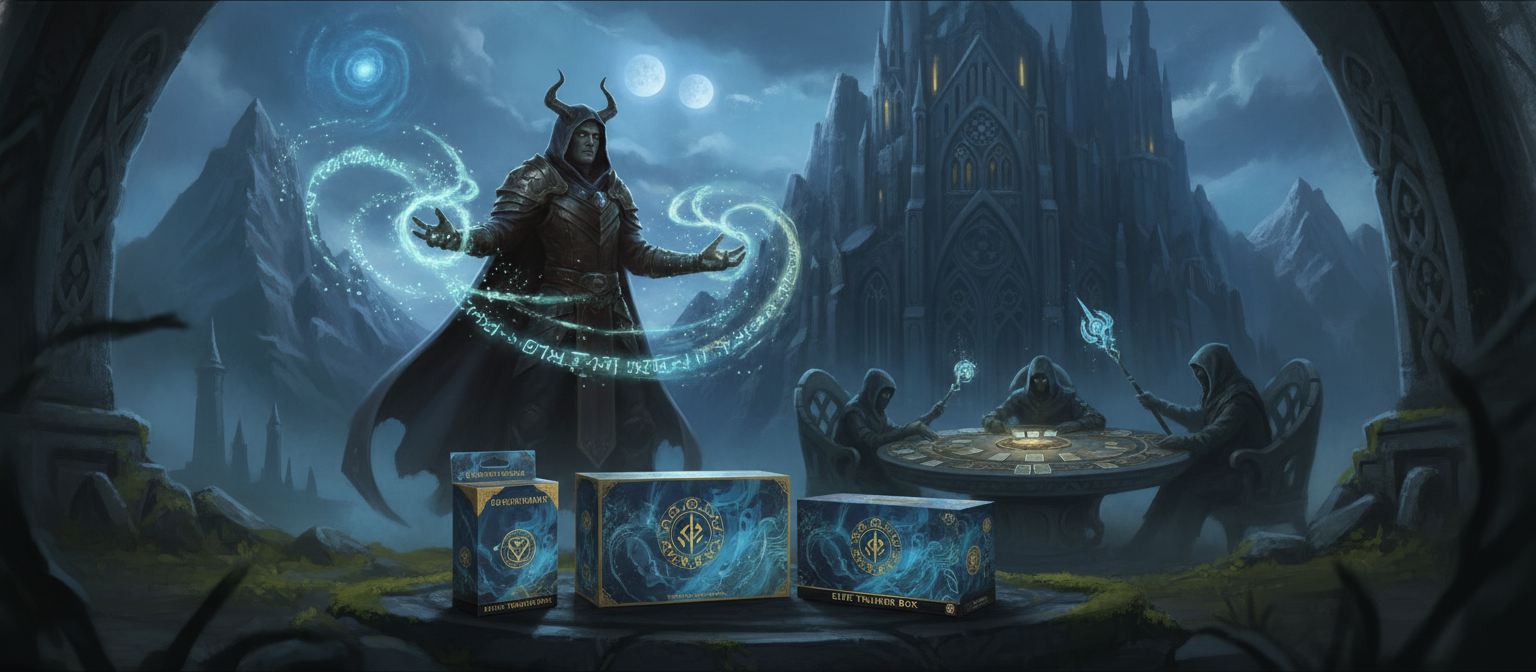
- The 'Am I the Bolas?'-Dilemma describes situations where players wonder if their behavior within a Commander playgroup is perceived as disruptive or unfair.
- Rule Zero allows playgroups to create their own house rules to customize the playing experience and make it more enjoyable for all participants.
- Common house rules concern "Fast Mana", "Game Changers" like Rhystic Study, or the prohibition of two-card combos.
- The handling of proxies is a recurring topic that should be discussed openly and honestly within the group.
- Communication and consensus are crucial to resolve conflicts and ensure a fair, pleasant gaming environment for everyone.
In the dynamic universe of Magic: The Gathering Commander, it's not just the choice of cards that matters, but also the unwritten rules and expectations shared by a playgroup. These collective agreements, often referred to as "house rules," are the foundation for a harmonious gaming experience. But what happens when these agreements are put to the test? And when do you ask yourself: "Am I the Bolas?" This article explores the importance of house rules, the delicate discussion around proxies, and how to resolve conflicts to maintain the fun for everyone.
What does "Am I the Bolas?" mean in Magic Commander?
The question "Am I the Bolas?" has become a common phrase in the Magic community, originating from a popular column on EDHREC. It alludes to the iconic villain Nicol Bolas, a ruthless dragon Planeswalker known for his manipulative and selfish nature. In the context of Commander play, a player asks "Am I the Bolas?" when they are unsure if their play style, a specific card choice, or a proposed house rule is perceived by their playgroup as unfair, disruptive, or overly competitive. It's about recognizing and respecting the fine line between the desire to win and the desire to create an enjoyable gaming experience for everyone. This dilemma often arises when expectations regarding power level, play style, or the acceptance of certain strategies within a group are not explicitly communicated or are misunderstood. It is a call for self-reflection on one's role in the social dynamics of the game.
The Importance of Rule Zero and Playgroup Agreements
Rule Zero is an unofficial but fundamental guideline in Magic Commander that allows each playgroup to adapt the official rules of the game and create their own house rules. This freedom is crucial for tailoring the gaming experience to the specific preferences and power level of the group. Instead of rigidly adhering to the official ban list or standard tournament rules, players can collectively decide which cards or strategies they find desirable or undesirable.
The significance of Rule Zero lies in its ability to enable a customized and often much more enjoyable gaming experience. A group that plays competitive cEDH, for example, will make different agreements than a group focused on thematic or more casual games. Such playgroup agreements can range from simple understandings to complex rule sets. They establish a common basis of understanding and help avoid frustration and misunderstandings during the game. Without clear agreements, players might bring decks with very different power levels to the table, which would quickly lead to unbalanced and unsatisfying games. Open discussion about these agreements before playing is therefore essential to ensure everyone is on the same page and can fully enjoy the game.
Common House Rules in Commander: From Fast Mana to Game Changers
In Commander, various house rules have been established over the years, aiming to make the game more interesting, fair, or simply more enjoyable. These rules often reflect a desire to mitigate certain dominant strategies or promote deck diversity. The source mentions some examples from a specific playgroup that are also found in many other groups.
One of the most common categories of house rules concerns "Fast Mana" artifacts. These are cards that allow players to produce a lot of mana very early in the game, thereby gaining a significant tempo advantage.
Fast Mana Restrictions
A prime example of this is Sol Ring.
| Statistic | Value |
|---|---|
| Cost | 1 |
| Type | Artifact |
| Ability | Tap: Add 2 colorless mana. |
Sol Ring is a card allowed in most Commander decks and often considered indispensable, as it produces two mana for just one. However, many playgroups choose to ban Sol Ring or similar cards like Mana Crypt or Mana Vault from their games to reduce the early "ramp" advantage and make the early turns of the game more balanced. The reasoning is often that the player who plays a Sol Ring first gains too great an advantage, making the game less fun for others.
Restrictions for "Game Changers" and Dominant Cards
Another category includes so-called "Game Changers" or cards that heavily influence the game and are often perceived as too dominant, repetitive, or not in line with the desired gaming experience. The source explicitly names Rhystic Study here.
| Statistic | Value |
|---|---|
| Cost | 2U |
| Color | Blue |
| Type | Enchantment |
| Ability | Whenever an opponent casts a spell, you may draw a card unless that player pays 1. |
Rhystic Study is a powerful blue enchantment that can provide a player with an enormous card advantage if opponents are unwilling or unable to pay the additional mana cost. Many groups find this frustrating, as it slows down the game and feels repetitive to constantly ask if the opponent pays 1 mana. Other "Game Changers" could be cards like Smothering Tithe or certain "Stax" elements that intentionally slow down the game and restrict resources.
Other Common House Rules
- Prohibition of Two-Card Combos and Strong Tutors: Some groups ban combos that immediately end the game, or overly efficient tutors like Demonic Tutor, which assemble these combos too quickly. This promotes more interactive games and prevents a player from winning too fast without others having a chance to react.
- No Land Destruction or Mass Land Destruction (MLD): Although MLD is allowed in the official rules, many playgroups find it frustrating and game-destroying, as it cuts players off from the game and unnecessarily prolongs rounds without clear progress being made.
- Restrictions on Infinite Combos: While some groups accept infinite combos, others insist that a combo must not lead to an immediate win or that certain types of combos are forbidden.
- Power Level Limits: Instead of banning specific cards, groups sometimes agree on a certain power level for their decks to ensure games remain balanced. This can be done through a deck review or honest self-assessment.
These examples show how diverse house rules can be and how important it is for a playgroup to discuss these points together and find a consensus to ensure a fair and entertaining gaming experience for everyone.
| Rule Category | Description | Typical Examples | Reasoning |
|---|---|---|---|
| Fast Mana | Restricts cards that produce a lot of mana early. | Sol Ring, Mana Crypt, Mana Vault | Prevents overly fast, unfair tempo advantages; promotes balanced early game. |
| Game Changer | Restricts cards that dominate the game too much or make it repetitive. | Rhystic Study, Smothering Tithe | Promotes interaction; prevents frustration from constant prompts or one-sided card advantage. |
| Combo Restrictions | Bans or restricts very efficient two-card combos or tutors. | Demonic Tutor, Thassa's Oracle + Demonic Consultation | Promotes longer, more interactive games; prevents sudden, unpredictable wins. |
| Land Destruction | Bans or restricts the destruction of lands. | Armageddon, Strip Mine | Prevents "lockouts" and excluding players from the game. |
| Power Level | Agreement on a specific power level for decks. | No specific cards, rather deck-building philosophy | Ensures balanced games and prevents one player from being overpowered. |
For more information on popular Commander cards and deck strategies, please visit our Commander Collection.
Dealing with Proxies: A Delicate Discussion in Playgroups
The topic of proxies is a recurring and often controversial point of discussion in the Magic community, especially in the Commander format. Proxies are placeholder cards used in place of an original Magic card. They can range from simple handwritten notes on a Basic Land to high-quality, professionally printed cards that are almost indistinguishable from the original. The stance on proxies varies greatly among different playgroups and individual players.
The source mentions that their playgroup generally rejects proxies, although the author himself considers an exception for cEDH decks. The group's reasoning is often emotional and rooted in the love for real cards and artwork. Many players appreciate the value of a genuine collection, the tactile experience of an original card, and the artistry of the illustrators. For them, owning and playing real cards is an integral part of the hobby.
Arguments for Proxies
-
Accessibility and Cost: Many of the most powerful and sought-after cards in Magic, such as the original Dual Lands (
ABUR Duals), are extremely expensive. Proxies allow players to play these cards without having to spend hundreds or thousands of euros. This lowers the barrier to entry and enables more players to participate in the format or try out different deck ideas. - Deck Testing: Proxies are ideal for testing new deck ideas or expensive cards before deciding to buy them. This prevents mispurchases and allows for more efficient deck optimization.
- Availability: Rare or out-of-print cards can be hard to find. Proxies bridge this gap.
- Power Level Balancing: In groups where some players own expensive cards and others do not, proxies can help balance the power level of decks without anyone being financially disadvantaged.
Arguments Against Proxies
- Authenticity and Collector's Value: For many, collecting real cards is an important aspect of Magic. Proxies undermine this value and the feeling of owning a genuine, valuable deck.
- Aesthetics: Although some proxies are high quality, many players prefer the original artwork and the feel of real cards.
- Economic Aspect: The market for Magic cards is an important part of the hobby. Widespread use of proxies could affect the value of real cards.
- Tournament Rules: In official tournaments, proxies are generally forbidden. Players who want to adhere to these standards also reject them in casual games.
Consensus in the Playgroup
The key to dealing with proxies lies in open communication and consensus within the playgroup. There is no universal "right" answer. Some groups allow a certain number of proxies, others only for very expensive cards, and still others forbid them completely. It is important that all players express their opinions and collectively reach an agreement that is acceptable to everyone. If a group agrees on a proxy ban, this should be respected, even if one personally holds a different opinion. Conversely, if proxies are allowed, no one should be judged for using them.
| Aspect of Proxy Discussion | Pro-Argument (for Proxies) | Con-Argument (against Proxies) |
|---|---|---|
| Cost & Accessibility | Allows participation in expensive formats without high expenses; lowers entry barrier. | Undermines the value and exclusivity of rare cards; promotes "cheap" playing. |
| Deck Testing | Ideal for testing new strategies and expensive cards before purchase. | Leads to decks one "can't actually afford"; less incentive to collect. |
| Authenticity & Collection | Promotes playing and creativity regardless of budget. | Destroys the appeal of collecting; appreciation for original artwork is lost. |
| Power Level | Allows for balancing power levels when some players have limited resources. | Can lead to an inflation of high-power decks; "Pay-to-Win" becomes "Proxy-to-Win". |
| Aesthetics | Modern proxies can be visually very appealing. | Originals have a special feel and are irreplaceable in collector's value. |
Whether you're a fan of original collectibles or appreciate the flexibility of proxies, the most important thing is to find a solution that maximizes your group's enjoyment. Discover our range of Magic: The Gathering single cards or find practical deck boxes for your collection.
When Agreements Are Tested: The Dilemma
Playgroup agreements are the foundation for a harmonious gaming experience, but they are not static. Situations constantly arise where these agreements are put to the test. The dilemma emerges when a player consciously or unconsciously deviates from established house rules, or when the group's dynamic changes.
A common scenario is the addition of a new player to the group. This new player may not be familiar with the specific house rules and power level of the existing group. If they bring a deck that is significantly stronger than the others, or use cards that the group has banned as "Game Changers" or "Fast Mana," this can quickly lead to frustration. The new player may be unaware of any wrongdoing, while the established players wonder whether they should inform them of their rules or simply accept the game.
Another dilemma arises when a long-standing member of the group decides to build a deck that consciously or unconsciously pushes the boundaries of the agreed-upon rules. Perhaps they want to try a new, stronger strategy they saw online, or they simply discovered a card they absolutely want to play, but which violates the "spirit" of the house rules. In this case, it can be difficult for the other group members to address the issue, as they don't want to strain a long-standing friendship. The fear of being seen as a "spoilsport" or "the Bolas" can lead to resentment remaining unspoken and accumulating over time.
An evolutionary change in the playgroup can also lead to problems. Perhaps the house rules were originally intended for a casual atmosphere, but some players have evolved over time and now prefer more competitive games. If the rules are not updated to reflect these new preferences, tensions arise. The dilemma here is that the original agreements no longer cover all needs, but no one wants to take the first step to change them. These situations require tact and, above all, an open communication culture to prevent the joy of the shared hobby from being lost.
Communication and Consensus: How to Resolve Conflicts in the Group
Conflicts in playgroups are inevitable, but they are also an opportunity to strengthen the community if handled correctly. The key to resolving disagreements about house rules or deck power levels lies in open, honest, and respectful communication.
1. Address the problem – but correctly: If you feel that a house rule is being violated or a certain card is negatively impacting the game, speak up. Choose the right time and place – not in the middle of a heated game, but perhaps after the round or at a separate meeting. Frame your concerns from an "I" perspective ("I feel that..." or "I perceive it as...") instead of being accusatory ("You always play...").
2. Active Listening: Give everyone involved the opportunity to present their perspective. Listen carefully without interrupting, and try to understand the other person's motivations. Sometimes a player's behavior is not due to malicious intent, but simply a misunderstanding or a different play philosophy.
3. Jointly seek solutions: Instead of just pointing out problems, suggest constructive solutions or be open to suggestions from others. Perhaps there are compromises, such as a card only being allowed in certain decks or on certain occasions. Or the group decides to officially adjust the house rules. It might also help to discuss the power level of the decks before the game and make adjustments if necessary.
4. Find Consensus: The goal is to find a solution that all parties can live with. This doesn't necessarily mean everyone is 100% happy, but that everyone accepts and respects the decision made. It's important to recognize that Commander is a social game, and the group's enjoyment should take precedence over an individual's victory. Consensus can mean putting a card on the playgroup's own ban list, reducing the power level of decks, or even seeking a new playgroup if the differences are too great.
5. Regular Review: The needs and preferences of a playgroup can change over time. It makes sense to regularly review and adjust house rules and agreements as needed. This creates a dynamic and flexible environment where everyone feels comfortable. Such proactive communication prevents frustrations from accumulating and leading to larger conflicts.
Through these steps, a playgroup can not only resolve current conflicts but also build a stronger, more resilient community that withstands the challenges of time.
Your Path to Fair Play: When You Are – or Are Not – the 'Bolas'
The question "Am I the Bolas?" is ultimately a question of self-reflection and empathy. You are the "Bolas" if you consciously or unconsciously negatively impact your group's gaming experience by:
- Ignoring agreed-upon house rules: For example, if your group has agreed not to play "Fast Mana" artifacts like Sol Ring, but you still include one in your deck and play it, you are disregarding the common agreements.
- Overriding the group's power level: If you consistently play decks that are significantly stronger than those of your fellow players, thereby creating one-sided, unsatisfying games, without communicating this beforehand or making compromises.
- Refusing communication: If you refuse to discuss problems or concerns, or dismiss the opinions of your fellow players, you contribute to the escalation of conflicts.
- Prioritizing ego over group fun: If your sole focus is on winning at all costs, even if it means other players are frustrated or not having fun.
You are not the "Bolas" if you:
- Play within the agreed-upon rules: If you adhere to the house rules and your deck matches the group's power level, you are playing fairly and respectfully.
- Communicate openly: If you address concerns, listen actively, and are willing to seek solutions together, you foster a healthy gaming environment.
- Are willing to compromise: If you are prepared to adjust your deck or try other play styles to improve the gaming experience for everyone.
- Prioritize the group's well-being: If shared fun and social interaction are as important to you as winning, you contribute positively to the playgroup.
Ultimately, Commander is a social game based on trust and shared experiences. The path to fair play involves empathy, respect, and a willingness to prioritize the group's needs over your own. If you are unsure whether you are "the Bolas," the best answer is always to seek a conversation with your playgroup. Only through open communication and mutual understanding can you create an environment where every player enjoys themselves and can fully experience the magic of the game. Discover our wide range of Magic The Gathering Commander Decks and find your next deck for unforgettable game rounds.


Share:
POP UP PARADE Téa Gardner: Neue Figur aus Yu-Gi-Oh! The Dark Side of Dimensions
Ultimate Tournament Pack 2: Konami's Exclusive Rewards for Duelists